
The area around the Village of Radium Hot Springs is a wildlife corridor and different species are often sighted throughout the year. It’s important to stay vigilant when you find yourself in the vicinity of larger wild animals.
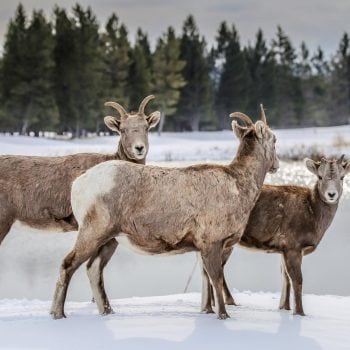
Rocky Mountain Bighorn Sheep
The Rocky Mountain bighorn sheep herd in Radium, also known as the Radium-Stoddart herd, are seen within the Village and on the slopes adjacent to the highway leading out of Radium. The last counts, taken in 2017, estimated that there are currently 150 sheep in the Radium-Stoddart herd, which is around a 25% decrease from the numbers taken in the early 2000s count. The rams are distinguished by their large, curled horns, while the females have shorter horns. These animals may appear tame and oblivious to passersby, but don’t be fooled. They are STILL wild animals, and need to be treated with caution and respect.
Sheep safety tips:
- Never approach the sheep – take your photos from a safe distance;
- Be cautious when walking your dog near the sheep. They see dogs as predators and may try to attack. Give the sheep a wide berth when you have your dog out for a walk;
- Be careful in the Spring, when the ewes are protective of their young;
- Be careful in the Fall when the rut (mating season) begins.
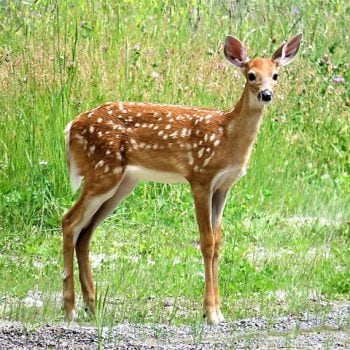
Deer
The Columbia Valley is home to mule deer and white-tail deer, which have managed to make urban areas home thanks to abundant food sources, availability of cover and limited presence of large predators. The growing population of deer in urban settings has led to increases in human-wildlife conflicts. Normally timid animals, if they become habituated to humans, they can become dangerous. Once established in a neighbourhood, they become hard to remove, so it is important to ensure that the deer do not become comfortable in your yard. Above all else, it is illegal to feed deer. For more information on reducing conflict with deer, visit the WildsafeBC website.
Deer safety tips:
- Never approach a deer, especially if it has young with it. This is especially important in the spring and summer when the young are hanging out with mom.
- Be cautious when walking your dog near deer as they see the dog as a predator and may try to attack. Keep your dog leashed.
- If a deer does advance and attack, try to stay upright and cover your head with your arms and back away.
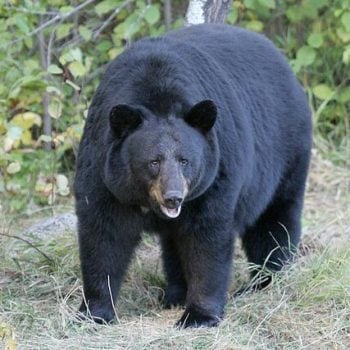
Bears
Bears have insatiable appetites and are natural scavengers. Once they find an easy food source, they will return to that source if it is still available. Once a bear becomes food-conditioned, it usually cannot be rehabilitated and relocation does not work. The Village of Radium Hot Springs supports the Bear Smart Community Program, which is an educational program aimed at helping to reduce human-bear conflicts through education, innovation and cooperation. We all need to take the appropriate steps to ensure that we aren’t attracting bears to our homes and businesses. These steps include, but aren’t limited to:
- storing garbage in a shed or garage;
- using bear-resistant household containers if you do not have a garage or shed;
- picking fruit daily as it ripens;
- replacing fruit trees with non-fruit bearing ones;
- keeping pet food indoors;
- cleaning BBQs after use;
- using a proper compost bin.
Many of the safety precautions recommended for bear encounters are also applicable to encounters with cougars (see below). For more information on how to avoid attracting bears to your home, visit the WildsafeBC website.
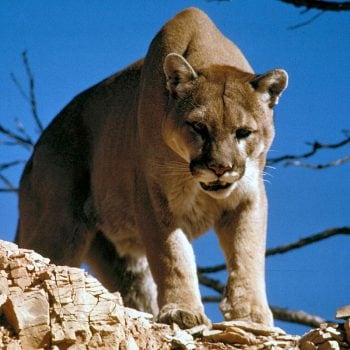
Cougars
Cougars favour rocky and mountain terrain, but will also live in forested and open areas, travelling long distances in search of food. Little is known about what triggers an attack, but we do know that younger children and small pets are most vulnerable to these attacks. Cougars feed mainly on deer, but will eat most animals, including house pets, coyotes and black bear cubs. Although encounters between cougars and humans are rare, they do happen. Take the appropriate precautions when hiking or walking in the woods, or even around the Village, and be safe.
Cougar safety tips:
- Keep your pet on a leash;
- Keep your smaller children close by — never let them wander on their own;
- If you are hiking, go as a group. A group is unlikely to be attacked;
- Reduce the chance of surprising a cougar by allowing it to pick up your scent (keep the wind at your back) and making noise to alert it of your presence;
- Stay alert and watch for signs. Tracks, droppings, scratched trees and food caches are all signs of a cougar;
- Never approach cougar kittens — mama is probably close by.
If, despite taking precautions, you encounter a cougar, do as follows:
- Stay calm and keep it in view. Pick up small children or pets. Back away slowly, ensuring the animal has a clear avenue of escape. Never turn your back or run away;
- Make yourself look as large as possible. Raise your hands above your head;
- Maintain eye contact, show your teeth, make loud noises, arm yourself with sticks or rocks;
- If the cougar attacks, fight back. Keep the animal in front of you at all times. Convince the cougar you are a threat, not prey. Use whatever you can as a weapon;
- Keep your focus on the cougar’s face and eyes.
For more information, visit https://wildsafebc.com/.
